
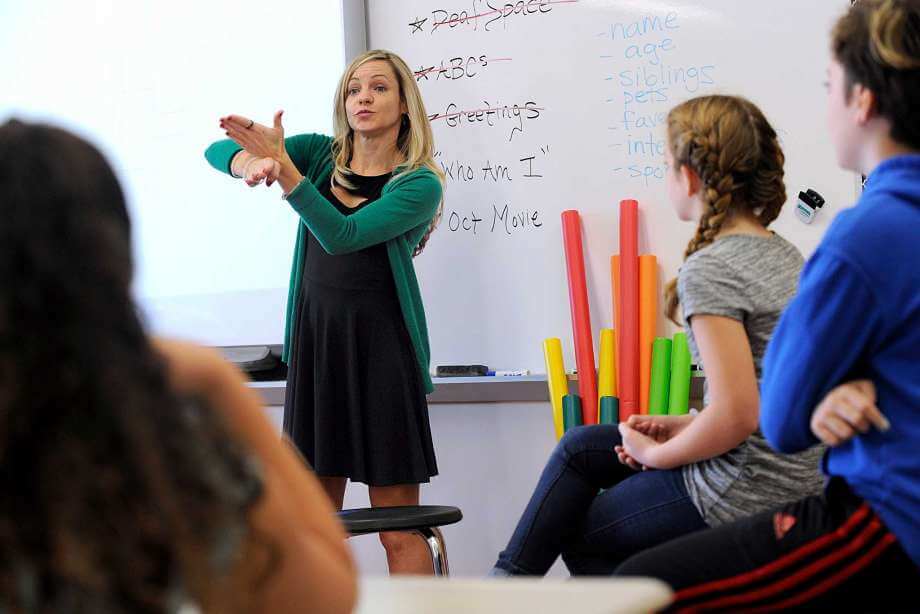
Frequently, instructors look for additional bolster in recognizing the characteristics of deafness in their students , in order to better address the individual needs of the child. This happens due to certain cues that the facilitator is able to identify about the language development of a student or after observing certain characteristics displayed by the student in the class room sessions.
How to Recognize the Signs of Deafness:
A few of the common characteristics of deafness commonly found in classrooms incorporate the following:
1)Difficulty taking after verbal directions.
2) Difficulty with verbal expression.
3) Some troubles with social/emotional or interpersonal skills.
4) Will regularly have a degree of language delay.
5) Often takes after and seldom leads.
6) Will more often than not struggle with articulation.
7)Can be effectively baffled on the off chance that their needs are not met — which may lead to a few behavioral troubles.
How can the students be assisted?
Language will be the need zone for students who are hard of hearing or deaf. It is the fundamental necessity for all subjects and will impact the student’s comprehension in your the classroom. Language development and it’s affect on the deaf and hard of hearing students can be complex. You may discover that they will require translators, note-takers,
or instructive collaborators to encourage communication. This will ordinarily require outside personnel involvement. In any case, some of the essential steps that you simply as an educator can take to address the wants of a hearing impeded student incorporate:
a) Numerous students with hearing inabilities will have a few specialized equipment prescribed by an audiologist. Offer assistance to the child to feel comfortable with their hearing gadget and encourage understanding and acknowledgment with other children through social stories.
b) Keep in mind that gadgets don’t return the child’s hearing back.
c)Loud situations will cause irritation to the child with a hearing gadget and commotion around the child ought to be kept to a least.
d) Check the gadget regularly to guarantee it is working.
e) When using videos ,without doubt utilize the ‘closed captioning’ feature.
f) Shut classroom doors/windows to assist dispense with noise.
g) Build up unsurprising schedules for this child,
h) Provide the higher grade students with visual outlines/graphic organizers and mind maps.
i) Use a home/school communication book.
j) Enunciate words clearly to help the child to lip read.
k) Provide visual materials and demos at every possible opportunity.

