
“The arts can make someone feel strong and capable of creating beauty after ugly experiences.”
— ERIC PATTERSON, LPC
Mandala means center, circle or disc. The word “mandala” is Sanskrit in origin and means a “complete circle.” They are diagrams with different shapes arranged around a central point. In many religions, mandalas are used as a tool for meditation. Colorful sand was used to create the first mandalas. People would blow on a finished mandala to move the minuscule sand grains and remove it. It was intended to serve as a reminder to people that nothing in life is permanent and that everything is prone to change. What a wonderful lesson in life!
Effect of Mandala on children with Special needs.:
Activities that encourage calmness and centering can be beneficial for children with attention deficit disorder (ADD) or attention deficit hyperactivity disorder (ADHD). Studies have shown that making a mandala reduces impulsivity and increases concentration in children with ADD/ADHD.
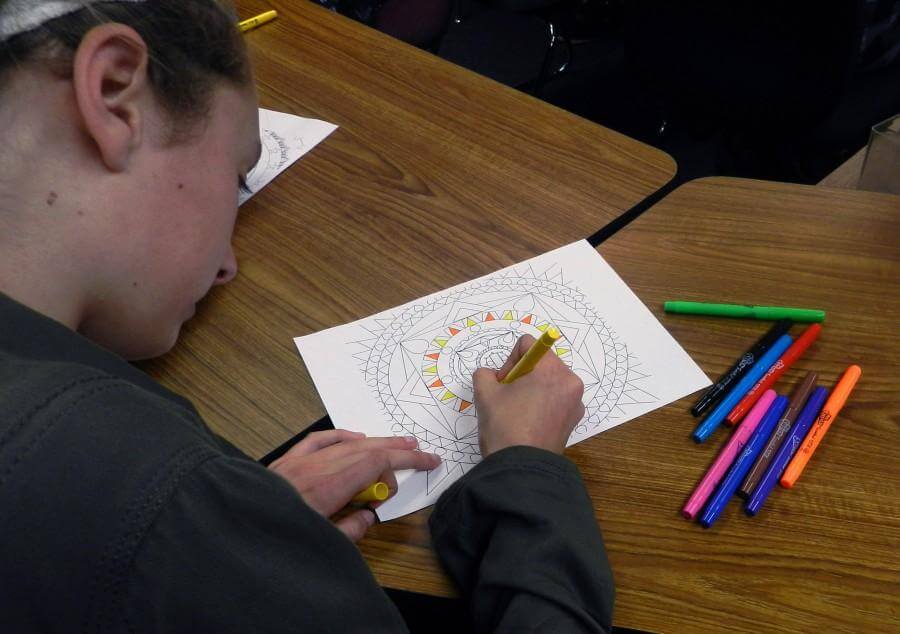
Mandala art has been known to increase focus. While coloring a mandala, children /adults pay close attention to the shapes/ colors and tend to focus more. Them employ more cognitive processes and consequently develop their focus, creativity and flexibility. To experience the mandala’s visual and emotional effects, the person must finish it. This encourages their potential for accountability and success, which will raise their self-esteem.
For children and adults with special needs, coloring a mandala greatly aids in controlling movements. It encourages relaxation and aids in their self-expression. Additionally, this activity will be a pleasant approach for energetic kids to quiet down and relax. it promotes relaxation and enables the kids to freely express themselves.
Mandalas can be used to improve a child’s hand-eye coordination. Additionally, it improves hand and finger motor skills. This has the result of gradually strengthening brain connections in kids between the ages of two and eight. Along with these advantages, it aids kids in honing their writing abilities, as well as the abilities required to tie knots or operate things.
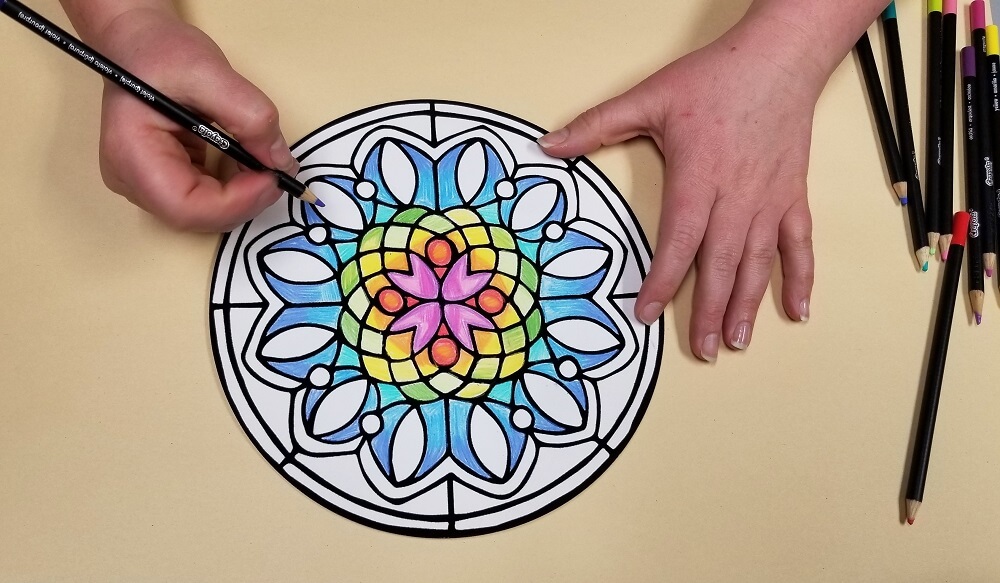
Mandala painting is a fantastic way for young children to increase their knowledge and language. This is because kids will be interacting with a variety of new hues, geometric shapes (such as circles, squares, triangles, and stars), sizes, and even emotions. Additionally, they might arouse a child’s sense of beauty.
A child can strengthen their cognitive and psychological skills while creating their own original drawing by coloring in mandalas. As a result, their confidence in themselves grows along with their sense of self-worth. They will be far better equipped to handle any challenges that arise. Mandalas to express feelings and life events
Colors help to the person to express their feelings. the shades they choose , the way they use the strokes, helps them to connect to their core feelings. They tend to start talking and expressing their emotions as the space becomes sacred. This expression helps children / adults to overcome trauma, fear. At times , also realizing their strengths and resilience.
Consistent use of Mandala aids in increasing our sense of calm, and establishing stability in our selves. It helps in promoting positive self image by reducing stress and anxiety levels and building patience, perseverance. Once, the person feels the shift, their perspective towards themselves and all things around too, see a positive shift. These mandalas are powerful tools for containing negative emotions, such as fear, anxiety or anger.
Mandala symbols are able to subliminally enter the person’s consciousness, which promote both healing and introspection. It’s very important to understand that painting mandalas doesn’t have to become an obligation for children. The important thing is that they enjoy doing it.

