A linguistic-cultural minority of persons with hearing loss brought on by heredity, sickness, or other factors are referred to as “Deaf” (with a capital D). People who are deaf do not regard themselves as being impaired; rather, they see themselves as belonging to a distinct culture with their own language and identity. Most Deaf people view deafness as a culture and community, whereas many hearing people consider it as a disability, a disease that needs to be treated, or a condition that leaves one helpless.
Our social and cognitive selves are built on communication, without which we are cut off from the outside world. Due to this, the therapeutic application of music therapy for the hearing impaired has concentrated on the areas of auditory training, speech production, and language development that are directly associated to communication. Music therapy offers the added benefit of enhancing socialization and self-esteem by addressing these communication deficiencies.
Many people still believe that music therapy is unworkable. This is largely because people have misconceptions about how well people with hearing loss can hear and enjoy musical stimulation. Darrow (1989) notes that only a small proportion of those with hearing loss are completely deaf. She goes on to say that the perception of sound is affected by the range of frequencies and the typical strength because of this.
Sound is perceived by persons with normal hearing as an auditory sensation. But there are other ways the sound waves can get to us. In addition to the ears, they are perceptible via the skin and bones in every area of the body. Thus, music is largely a series of vibrations to a deaf youngster and is sensed and transmitted to the brain by methods other than the auditory system and a hearing aid. However, the deaf infant can react to these vibrations, which can carry rhythms, sounds, and melodic sequences, and this can result in movements that are very beneficial to the youngster.
The musical experience of a deaf child is distinct from that of a hearing one. The child will experience contact-vibration sensations of sounds, speech, song, and music by touching the sound-source (for example, by sitting on the loudspeaker, feeling the vibration on the floor, touching the musical instrument, or by touching his or her own or another person’s voice apparatus — the larynx). However, even at a distance from the sound source, a deaf youngster can hear the sound as sound perception—specifically, as airborne sound waves produced by the vibrating sound source. All areas of the body, including the ears, can detect sound through skin and bones.
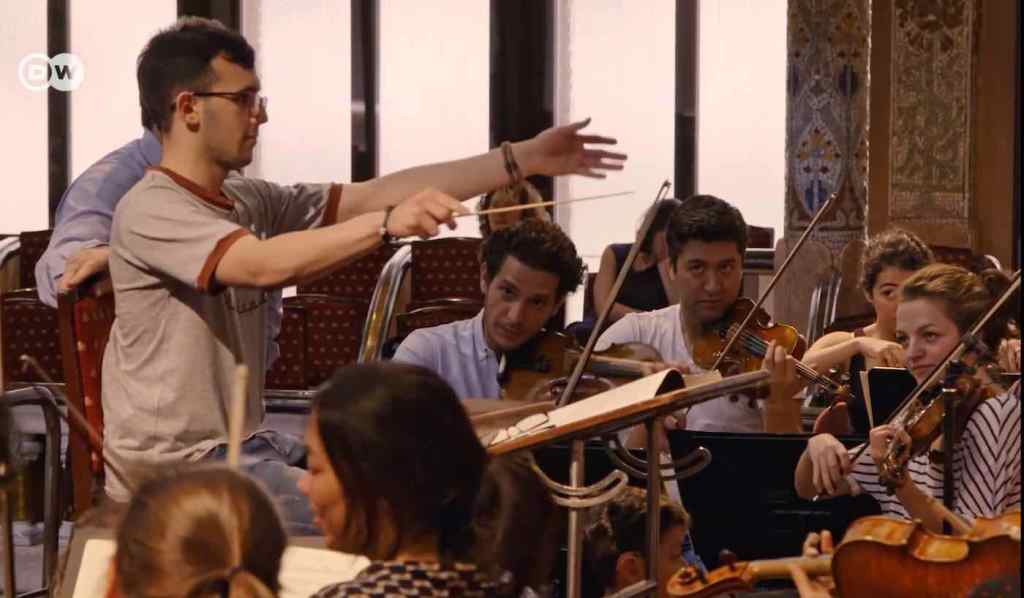
Our kids and adults gain important emotional insights and experiences from music. It places more emphasis on their abilities than any issues or constraints that may arise from their hearing loss or additional functional decline. So, as kids succeed, music becomes more important to them.
Music therapy for those with hearing loss can:
a) Improve auditory skills, increase residual hearing use: The process of habilitation for those with hearing loss includes auditory training. To accelerate and improve the quality of these people’s social and communicative development, they must learn to interpret and pay attention to the sounds—especially speech—in their environment. The main objective of auditory training is to maximize the remaining hearing ( residual hearing) of the client who has hearing loss. People with hearing loss must develop the complex mental and auditory skills of listening. Auditory training, which aims to help the hearing-impaired client acquire focused and analytical attention to sound, can be a tiresome and monotonous process. As a result, music becomes a beneficial tool to motivate and enrich the sessions.
Numerous auditory training goals can be successfully met with the use of music therapy techniques. Through musical experiences, you can teach your ears to pay attention to sound, pay attention to distinctions in sound, recognize things and events from their sounds, and utilize your hearing to judge distance and position of sound (Darrow, 1989). Additionally, Robbins and Robbins (1980)
discovered that appropriate music is easier to hear and comprehend than speech and is therefore more likely to create a natural urge to employ residual hearing.
b) Improve language learning, education, and communication in general: Limited auditory input hinders a child with hearing loss’s capacity to hear others speak and also has an adverse effect on their own language development. Regular aural language exposure gives children critical knowledge about vocabulary, grammar, semantics, and pragmatics, which they typically learn incidentally.
The client who is hearing challenged can benefit much from music therapy in terms of their ability to communicate and learn languages. For instance, Gfeller (1990) outlines the extensive library of memorable music and movement experiences used in music therapy that can be combined with spoken and, later, written words. Particularly young toddlers learn best by direct manipulation of their environment and mostly motoric functioning.
discovered that appropriate music is easier to hear and comprehend than speech and is therefore more likely to create a natural urge to employ residual hearing.
b) Improve language learning, education, and communication in general: Limited auditory input hinders a child with hearing loss’s capacity to hear others speak and also has an adverse effect on their own language development. Regular aural language exposure gives children critical knowledge about vocabulary, grammar, semantics, and pragmatics, which they typically learn incidentally.
The client who is hearing challenged can benefit much from music therapy in terms of their ability to communicate and learn languages. For instance, Gfeller (1990) outlines the extensive library of memorable music and movement experiences used in music therapy that can be combined with spoken and, later, written words. Particularly young toddlers learn best by direct manipulation of their environment and mostly motoric functioning.
Music is a wonderful learning tool because it offers a multisensory experience that is eventually connected to mental images or symbols (Gfeller, 1990). The music therapist can label or characterize musical events and sequences, giving the youngster linguistic models. The music therapist creates engaging, fun exercises that serve as crucial motivation because language therapy can be a protracted and challenging process. Language concepts can be experienced in various circumstances through music therapy practices.
c) Encourage socializing, self-awareness, emotional fulfilment, and self-worth: Hearing-impaired people have been described in some literature as having inferiority complexes, despair, detachment, and isolation (see review by Galloway, & Bean, 1974). Language and communication difficulties, poor body awareness, and social isolation are all major contributors to these sensations. These problems can be addressed and the self-esteem of the hearing-impaired person raised through music therapy.
Music is a wonderful learning tool because it offers a multisensory experience that is eventually connected to mental images or symbols (Gfeller, 1990). The music therapist can label or characterize musical events and sequences, giving the youngster linguistic models. The music therapist creates engaging, fun exercises that serve as crucial motivation because language therapy can be a protracted and challenging process. Language concepts can be experienced in various circumstances through music therapy practices.
c) Encourage socializing, self-awareness, emotional fulfilment, and self-worth: Hearing-impaired people have been described in some literature as having inferiority complexes, despair, detachment, and isolation (see review by Galloway, & Bean, 1974). Language and communication difficulties, poor body awareness, and social isolation are all major contributors to these sensations. These problems can be addressed and the self-esteem of the hearing-impaired person raised through music therapy.
Some d/Deaf musicians still have some hearing, therefore they might be able to hear some sound. Vibration is crucial to d/Deaf musicians since audible (auditory) cues are unavailable to profoundly d/Deaf musicians and visual cues don’t always provide enough information for interactive rehearsal and performance to be fun and successful.
A new technology helps hearing-impaired people hear their surroundings.
It does this using a revolutionary gadget that converts sound into dynamic patterns of vibrations, providing those who are deaf or hard of hearing with a novel approach to obtain essential information. Wearable Neo-sensory Buzz, which resembles a wristwatch, simulates the cochlea by transmitting vibrations to the brain through the nerve system. This essentially opens up a new sensory pathway to the brain’s auditory processing center. (Those who don’t have hearing loss can also wear it.)

